
Total Quality Management (TQM)   181-slide PPT PowerPoint presentation slide deck (PPTX)
$89.00

Total Quality Management (TQM) (181-slide PPT PowerPoint presentation slide deck (PPTX)) Preview Image
Log in to unlock full preview.
Total Quality Management (TQM) (181-slide PPT PowerPoint presentation slide deck (PPTX)) Preview Image
Arrow   Click main image to view in full screen.

Total Quality Management (TQM) (PowerPoint PPTX Slide Deck)

PowerPoint (PPTX) + Zip archive file (ZIP) 181 Slides

#2 in Continuous Improvement $89.00
Developed by a seasoned TQM Consultant with a proven track record at Microsoft, IBM and Underwriters Laboratories (UL), this comprehensive presentation is your pathway to achieving business excellence through Total Quality Management.
Add to Cart


Immediate download
Fully editable PowerPoint
Free lifetime updates

BENEFITS OF THIS POWERPOINT DOCUMENT

  1. Ready-to-Use & Professional – Save time with a well-structured, visually engaging, and business-ready presentation.
  2. Comprehensive & Practical – Covers essential TQM concepts, frameworks, and tools for immediate application.
  3. Enhances Learning & Engagement – Simplifies complex ideas with clear explanations, visuals, and structured content.

QUALITY MANAGEMENT PPT DESCRIPTION

181-slide PowerPoint presentation (PPTX) with supplemental ZIP, Total Quality Management (TQM), developed by a seasoned TQM consultant with experience at Microsoft, IBM, and Underwriters Laboratories. Covers core TQM topics including PDCA cycle, Deming’s 14 Points, Kano Model, Juran’s Trilogy, Cost of Quality, process mapping, and TQM implementation roadmap; includes training materials, cost-of-quality framework, scorecards, and customer feedback templates. Target users: corporate executives, quality assurance teams, process improvement leaders, and training professionals. Used for strategic planning, employee training, and quality assessments; sold as a digital download on Flevy.
Use this presentation when an organization must embed continuous improvement and quality governance across functions—examples include strategic planning, rolling out quality training, or evaluating current quality practices.
  Corporate executives integrating TQM into strategic objectives and defining quality KPIs and governance roles.
  Quality assurance teams applying process mapping and Cost of Quality assessment to reduce non-conformance costs.
  Process improvement leaders running PDCA cycles and root-cause analysis to cut defect rates.
  Training professionals building TQM workshops using the included training slides and Inspection Exercise.
The approach emphasizes PDCA and tools aligned with Lean and Six Sigma process-improvement practices.

Total Quality Management (TQM) is a strategic approach that embeds a culture of continuous improvement across an organization. It goes beyond processes and outcomes, fostering a mindset where every function, system, and individual contributes to quality and excellence. By engaging all employees, TQM drives efficiency, enhances customer satisfaction, reduces costs, and builds a resilient organization prepared for future challenges.

In today's dynamic and competitive business environment, TQM remains highly relevant. It integrates seamlessly with methodologies like Lean, Six Sigma, and Design Thinking, providing organizations with the agility to adapt, innovate, and sustain long-term success.

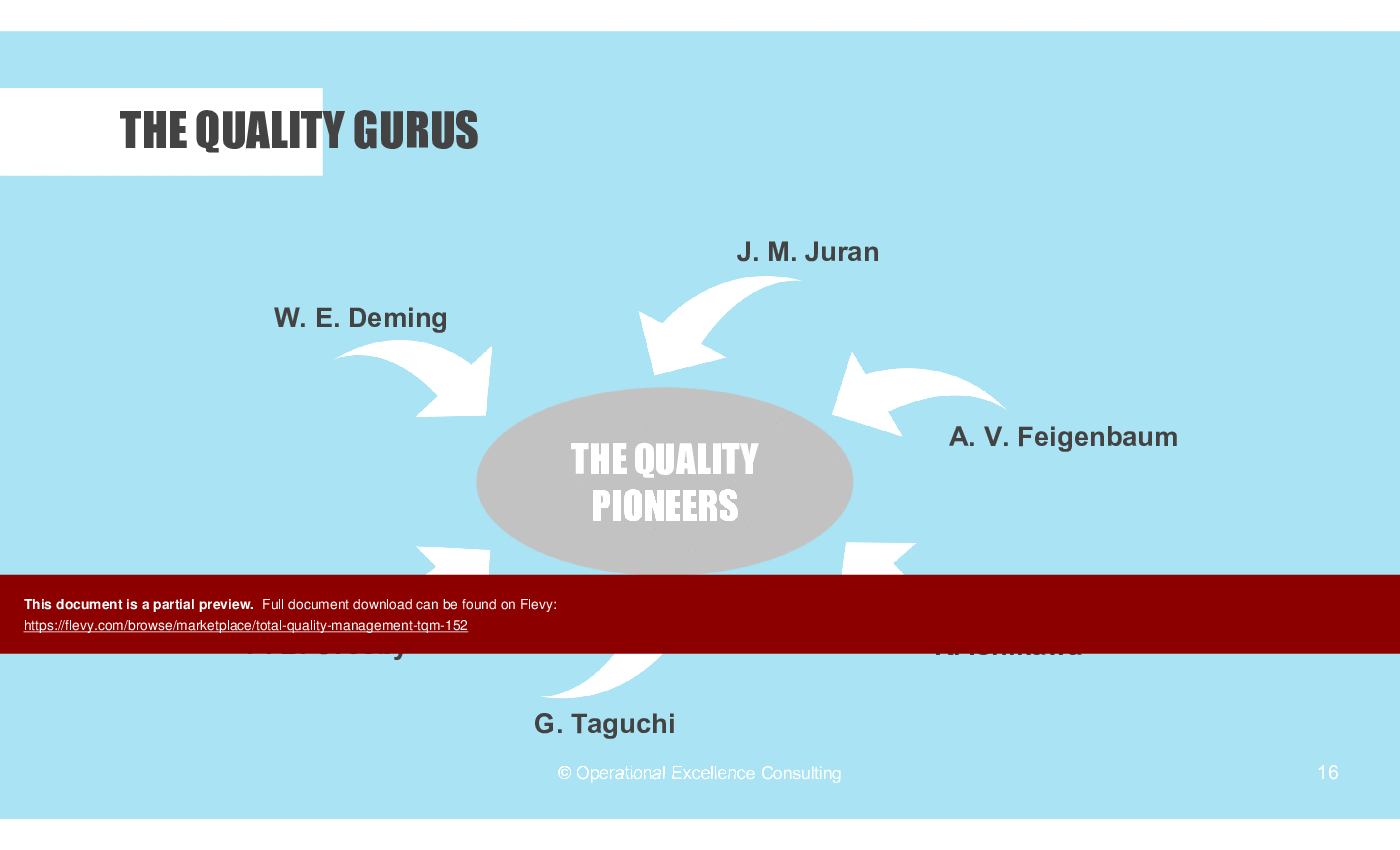
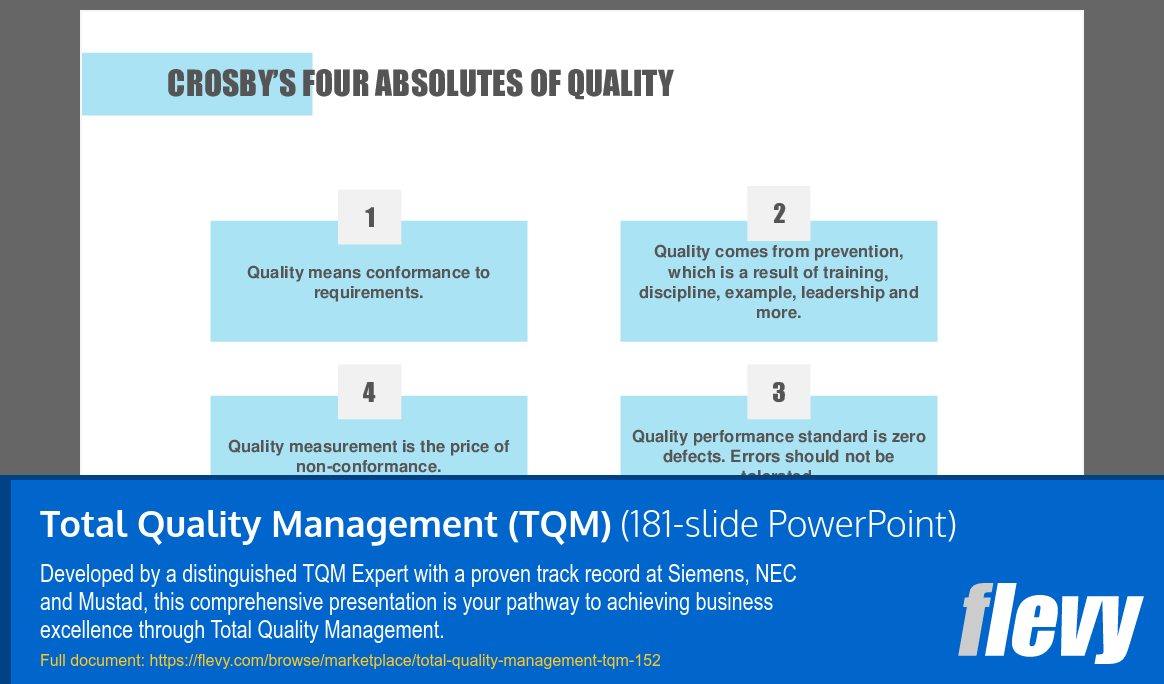
This training will equip employees with the knowledge and tools to embrace quality as a personal and collective responsibility. Participants will learn from industry pioneers like W. Edwards Deming, Joseph Juran, and Philip Crosby while exploring proven models, strategies, and techniques to drive operational excellence.

This structured approach ensures participants gain a clear, actionable understanding of TQM and how to apply it to achieve sustainable business excellence.

||||||||||||||||||||||||||||||||||||||||||||||||||||||||||||||||||||||||||||||||||||||||||||||||||||||||||||||||||||||||||||||||||||||||||||||||||||||
This training package includes:
1. TQM training presentation (PowerPoint format, 16:9 widescreen)
2. The Inspection Exercise (PowerPoint format, 4:3 standard screen)
||||||||||||||||||||||||||||||||||||||||||||||||||||||||||||||||||||||||||||||||||||||||||||||||||||||||||||||||||||||||||||||||||||||||||||||||||||||

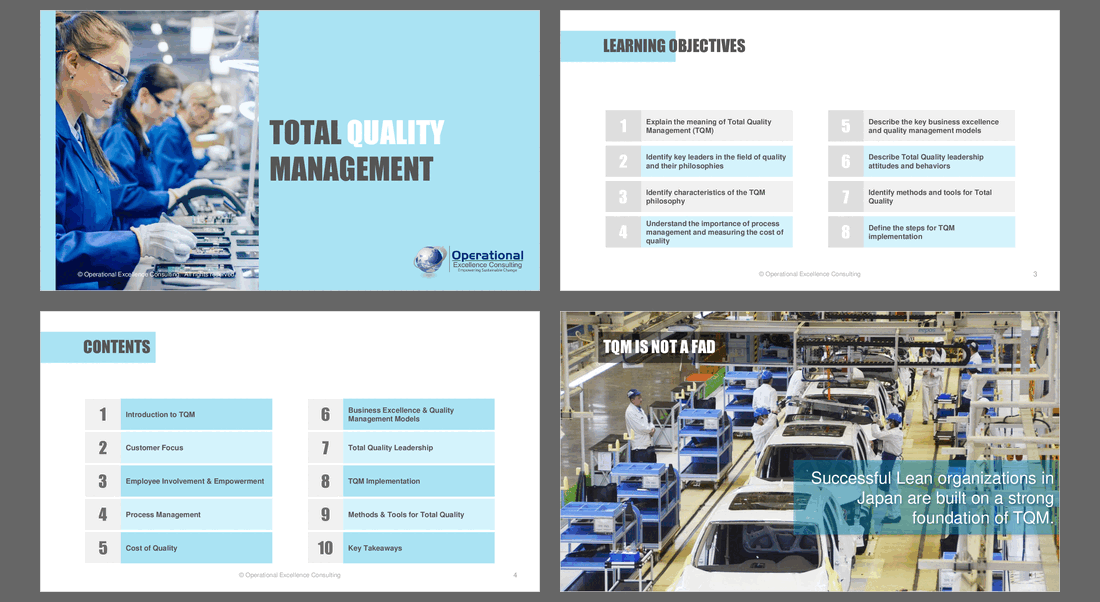
LEARNING OBJECTIVES

1. Foundations of TQM – Understand the principles, philosophy, and impact of Total Quality Management.
2. Quality Leadership & Frameworks – Explore insights from key quality leaders and the major business excellence models.
3. Process Management & Measurement – Learn the importance of managing processes and measuring the cost of quality.
4. Tools & Techniques for Quality Improvement – Identify essential methodologies, tools, and techniques for continuous improvement.
5. Implementing TQM for Success – Discover practical steps for TQM implementation and fostering a culture of quality.

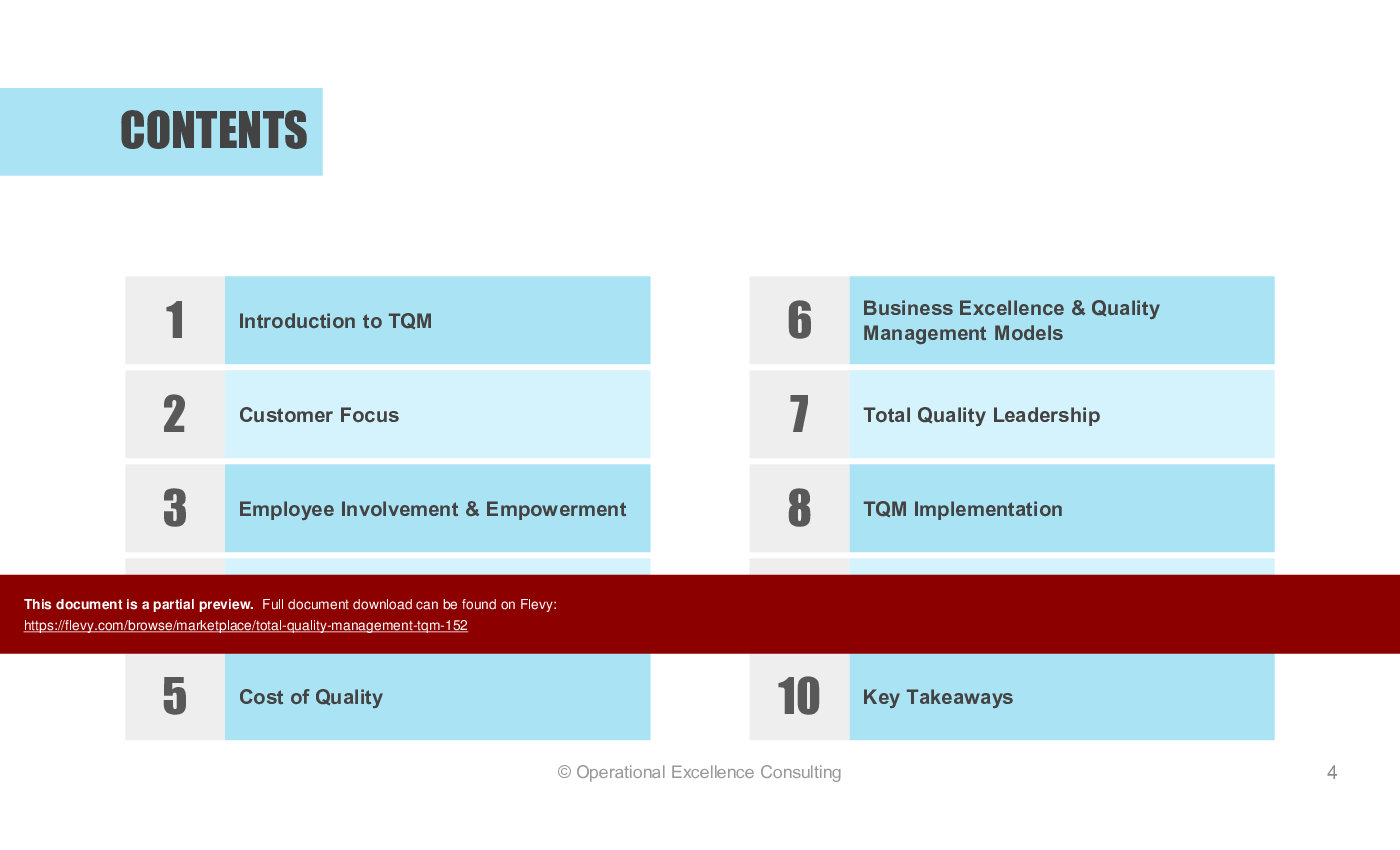
CONTENTS

1. Introduction to TQM
2. Customer Focus
3. Employee Involvement & Empowerment
4. Process Management
5. Cost of Quality
6. Business Excellence & Quality Management Models
7. Total Quality Leadership
8. Implementing TQM
9. Tools & Techniques for Total Quality
10. Summary & Conclusion

Got a question about the product? Email us at support@flevy.com or ask the author directly by using the "Ask the Author a Question" form. If you cannot view the preview above this document description, go here to view the large preview instead.

MARCUS OVERVIEW

This synopsis was written by Marcus [?] based on the analysis of the full 181-slide presentation.


Executive Summary
This Total Quality Management (TQM) presentation is meticulously crafted to guide organizations towards achieving excellence through quality management principles. Developed by an experienced TQM consultant with a robust background at Microsoft, IBM, and Underwriters Laboratories, this presentation provides a comprehensive overview of TQM methodologies. It emphasizes the importance of customer satisfaction, employee involvement, and continuous improvement. By utilizing this presentation, corporate executives and consultants can effectively implement TQM strategies to enhance operational efficiency and foster a culture of quality within their organizations.

Who This Is For and When to Use
•  Corporate executives seeking to implement TQM principles across their organizations
•  Quality assurance teams aiming to enhance product and service quality
•  Process improvement leaders focused on continuous operational enhancements
•  Training and development professionals designing quality management training programs

Best-fit moments to use this deck:
•  During strategic planning sessions to integrate TQM into business objectives
•  In training workshops aimed at educating employees about quality management principles
•  When assessing current quality management practices and identifying areas for improvement

Learning Objectives
•  Define Total Quality Management (TQM) and its significance in organizational success
•  Identify key leaders in the field of quality and their philosophies
•  Explain the importance of process management and measuring the cost of quality
•  Describe Total Quality leadership attitudes and behaviors
•  Identify methods and tools for implementing TQM
•  Define the steps for effective TQM implementation

Table of Contents
•  Introduction to TQM (page 5)
•  Customer Focus (page 39)
•  Employee Involvement & Empowerment (page 61)
•  Process Management (page 78)
•  Cost of Quality (page 92)
•  Business Excellence & Quality Management Models (page 113)
•  Total Quality Leadership (page 129)
•  TQM Implementation (page 156)
•  Methods & Tools for Total Quality (page 163)
•  Key Takeaways (page 174)

Primary Topics Covered
•  Introduction to TQM - An overview of Total Quality Management, emphasizing its role as a management approach centered on quality and customer satisfaction.
•  Customer Focus - The necessity of understanding customer needs and expectations to enhance product and service quality.
•  Employee Involvement & Empowerment - Strategies for engaging employees at all levels to foster a culture of quality and continuous improvement.
•  Process Management - The application of the Plan-Do-Check-Act (PDCA) cycle to manage and improve organizational processes.
•  Cost of Quality - Understanding the financial implications of quality management, including the costs associated with non-conformance and conformance.
•  Business Excellence & Quality Management Models - An exploration of various models that guide organizations in achieving business excellence through quality management.
•  Total Quality Leadership - The importance of leadership in fostering a culture of quality and commitment to continuous improvement.
•  TQM Implementation - A structured approach to implementing TQM principles within an organization.
•  Methods & Tools for Total Quality - Practical tools and methodologies that support quality improvement initiatives.

Deliverables, Templates, and Tools
•  TQM implementation roadmap template for strategic planning
•  Employee training materials on TQM principles and practices
•  Process mapping tools for visualizing and improving workflows
•  Cost of Quality assessment framework for evaluating quality-related expenses
•  Quality management performance scorecards for tracking progress
•  Customer feedback collection templates to gauge satisfaction

Slide Highlights
•  The evolution of Total Quality Management, showcasing its historical context and development over time.
•  Deming’s 14 Points for TQM, providing actionable guidelines for quality improvement.
•  The Kano Model, illustrating customer preferences and their impact on satisfaction.
•  Juran’s Trilogy, emphasizing the interconnection between quality planning, control, and improvement.
•  The Cost of Quality framework, detailing the financial implications of quality management decisions.

Potential Workshop Agenda
Introduction to TQM (60 minutes)
•  Overview of TQM principles and their importance
•  Discussion on organizational culture and quality

Customer Focus and Employee Involvement (90 minutes)
•  Identifying customer needs and expectations
•  Strategies for engaging employees in quality initiatives

Process Management and Cost of Quality (90 minutes)
•  Applying the PDCA cycle to improve processes
•  Understanding and measuring the cost of quality

TQM Implementation Strategies (60 minutes)
•  Developing a TQM implementation plan
•  Assigning roles and responsibilities for TQM initiatives

Customization Guidance
•  Tailor the presentation to reflect specific organizational goals and quality objectives.
•  Modify case studies and examples to align with industry-specific challenges and solutions.
•  Adjust terminology and frameworks to resonate with the organizational culture and employee familiarity.

Secondary Topics Covered
•  Historical context of quality management and its evolution
•  Key quality management models and frameworks
•  The role of leadership in fostering a quality culture
•  Techniques for measuring and improving customer satisfaction
•  Strategies for sustaining continuous improvement initiatives

Topic FAQ

What are the core components of Total Quality Management that organizations should focus on?
Total Quality Management centers on customer focus, employee involvement and empowerment, process management, leadership commitment, and continuous improvement. Practical elements include understanding customer needs, engaging employees in quality initiatives, managing processes with cycles like Plan-Do-Check-Act, and measuring quality-related costs using a Cost of Quality framework and the PDCA cycle.

Which quality tools and methods are commonly used in TQM programs?
TQM commonly employs process mapping, root cause analysis, Quality Function Deployment (QFD), statistical quality control methods, Kano Model for customer preferences, Deming’s 14 Points, and Juran’s Trilogy for planning, control, and improvement. These tools support diagnosis, prioritization, and improvement using process mapping tools.

How can an organization assess the financial impact of quality initiatives?
Organizations measure quality impact by tracking the costs of conformance and non-conformance, monitoring quality performance metrics, and linking outcomes to financial indicators and customer feedback. A structured Cost of Quality assessment framework and performance scorecards help quantify financial effects and operational improvements using the Cost of Quality framework.

What is a practical agenda for a one-day TQM workshop?
A practical one-day workshop can be structured as: 60 minutes on TQM fundamentals and culture, 90 minutes on customer focus and employee involvement, 90 minutes on process management and Cost of Quality, and 60 minutes on developing a TQM implementation plan—reflecting a 60/90/90/60 minute agenda.

What should buyers look for when choosing a TQM training package or toolkit?
Buyers should evaluate coverage of foundational principles, inclusion of leadership and implementation guidance, practical templates (roadmaps, process maps), training materials, and measurement tools. Also consider file formats and adaptability to your context; for example, Flevy’s Total Quality Management (TQM) package includes a TQM implementation roadmap template.

What phases or steps are typically included when implementing TQM in an organization?
TQM implementation typically progresses from introducing TQM principles and establishing customer focus, to engaging employees, managing processes with PDCA, measuring Cost of Quality, applying quality models, and instituting leadership behaviors that sustain improvement—summarized under the TQM Implementation section beginning on page 156.

I need to reduce defects on a production line—what TQM approach should I apply?
Apply the PDCA cycle combined with process mapping to identify waste and variation, use root cause analysis and statistical methods to verify fixes, and monitor results with quality performance scorecards. Flevy’s Total Quality Management (TQM) presentation includes PDCA guidance and process mapping tools to support these activities.

How should I assess the cost versus value of buying TQM templates and training materials?
Assess value by mapping templates and materials to your needs (training, implementation roadmap, measurement), required customization effort, team size, and expected reductions in non-conformance costs or improved customer metrics. Compare offerings on scope and format; Flevy’s Total Quality Management (TQM) is a 181-slide PowerPoint presentation with supplemental ZIP.

Document FAQ
What is Total Quality Management (TQM)?
TQM is a management approach focused on quality, involving all members of an organization to achieve long-term success through customer satisfaction.

How does TQM differ from traditional quality control?
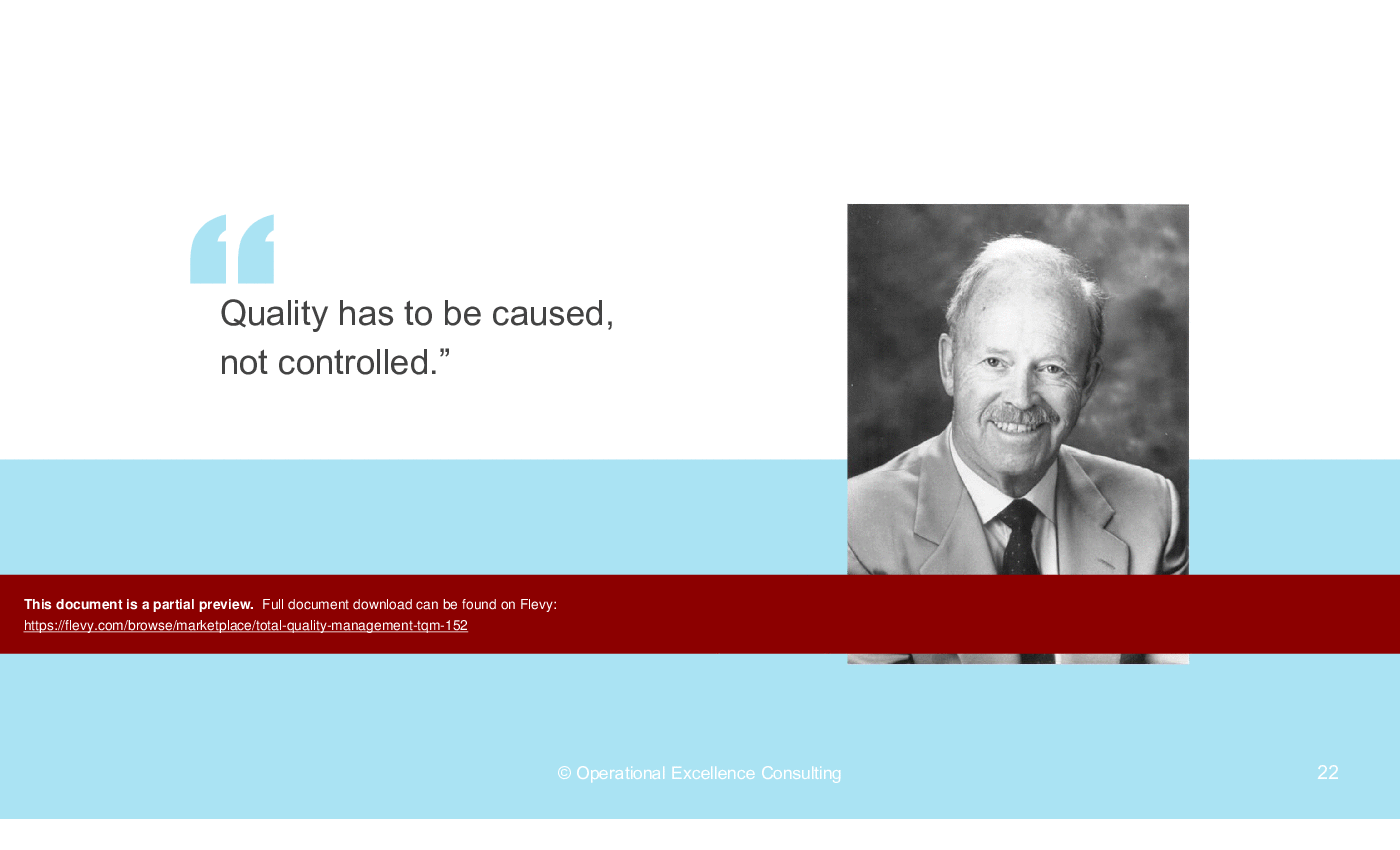
TQM emphasizes a proactive approach to quality, involving continuous improvement and employee engagement, rather than relying solely on inspection and correction.

What are the key benefits of implementing TQM?
Implementing TQM can lead to improved customer satisfaction, enhanced employee morale, increased productivity, and reduced costs associated with poor quality.

How can organizations measure the success of TQM initiatives?
Organizations can measure success through customer feedback, quality performance metrics, and financial indicators related to quality costs.

What role do employees play in TQM?
Employees are crucial to TQM as their involvement and empowerment drive continuous improvement and foster a culture of quality throughout the organization.

What tools are commonly used in TQM?
Common tools include process mapping, root cause analysis, quality function deployment, and various statistical methods for quality control.

How can leadership support TQM efforts?
Leadership can support TQM by demonstrating commitment, providing resources, and fostering an organizational culture that prioritizes quality and continuous improvement.

What challenges might organizations face when implementing TQM?
Challenges include resistance to change, lack of management commitment, insufficient training, and difficulties in measuring quality performance.

Glossary
•  Total Quality Management (TQM) - A management approach focused on long-term success through customer satisfaction.
•  Cost of Quality (COQ) - The total cost of ensuring product and service quality, including costs of conformance and non-conformance.
•  Plan-Do-Check-Act (PDCA) - A cyclical process for continuous improvement in quality management.
•  Quality Function Deployment (QFD) - A methodology for translating customer needs into engineering requirements.
•  Kano Model - A framework for categorizing customer preferences and their impact on satisfaction.
•  Deming’s 14 Points - A set of principles for quality improvement proposed by W. Edwards Deming.
•  Juran’s Trilogy - A framework encompassing quality planning, control, and improvement.
•  Employee Empowerment - Granting employees the authority and responsibility to improve processes and address discrepancies.
•  Customer Focus - Understanding and prioritizing customer needs and expectations in quality management.
•  Continuous Improvement - Ongoing efforts to enhance products, services, or processes.
•  Quality Circles - Groups of employees who meet regularly to discuss and solve work-related problems.
•  Benchmarking - Comparing organizational practices and performance metrics to industry bests.

Source: Best Practices in Quality Management, Continuous Improvement, TQM, COQ PowerPoint Slides: Total Quality Management (TQM) PowerPoint (PPTX) Presentation Slide Deck, Operational Excellence Consulting


$89.00
Developed by a seasoned TQM Consultant with a proven track record at Microsoft, IBM and Underwriters Laboratories (UL), this comprehensive presentation is your pathway to achieving business excellence through Total Quality Management.
Add to Cart
  

ABOUT THE AUTHOR

Author image
Additional documents from author: 257
Terms of usage (for all documents from this author)

Operational Excellence Consulting, founded in 2009 by Allan Ung, draws from extensive experience at Microsoft, IBM, and Underwriters Laboratories (UL). We specialize in strategy deployment, customer experience design, and operational excellence, applying Design Thinking, Lean, and Systems Thinking to maximize customer value and minimize waste.

Our ... [read more]

Ask the Author a Question

You must be logged in to contact the author.

Click here to log in Click here register

Did you know?
The average daily rate of a McKinsey consultant is $6,625 (not including expenses). The average price of a Flevy document is $65.
Bundle and save! You can save up to % with bundles!

View bundle(s)


Trusted by over 10,000+ Client Organizations
Since 2012, we have provided business templates to over 10,000 businesses and organizations of all sizes, from startups and small businesses to the Fortune 100, in over 130 countries.
AT&T GE Cisco Intel IBM Coke Dell Toyota HP Nike Samsung Microsoft Astrazeneca JP Morgan KPMG Walgreens Walmart 3M Kaiser Oracle SAP Google E&Y Volvo Bosch Merck Fedex Shell Amgen Eli Lilly Roche AIG Abbott Amazon PwC T-Mobile Broadcom Bayer Pearson Titleist ConEd Pfizer NTT Data Schwab


Read Customer Testimonials

 
"Flevy is our 'go to' resource for management material, at an affordable cost. The Flevy library is comprehensive and the content deep, and typically provides a great foundation for us to further develop and tailor our own service offer."

– Chris McCann, Founder at Resilient.World
 
"FlevyPro provides business frameworks from many of the global giants in management consulting that allow you to provide best in class solutions for your clients."

– David Harris, Managing Director at Futures Strategy
 
"As a young consulting firm, requests for input from clients vary and it's sometimes impossible to provide expert solutions across a broad spectrum of requirements. That was before I discovered Flevy.com.

Through subscription to this invaluable site of a plethora of topics that are key and crucial to consulting, I "

– Nishi Singh, Strategist and MD at NSP Consultants
 
"As a small business owner, the resource material available from FlevyPro has proven to be invaluable. The ability to search for material on demand based our project events and client requirements was great for me and proved very beneficial to my clients. Importantly, being able to easily edit and tailor "

– Michael Duff, Managing Director at Change Strategy (UK)
 
"If you are looking for great resources to save time with your business presentations, Flevy is truly a value-added resource. Flevy has done all the work for you and we will continue to utilize Flevy as a source to extract up-to-date information and data for our virtual and onsite presentations!"

– Debbi Saffo, President at The NiKhar Group
 
"As a niche strategic consulting firm, Flevy and FlevyPro frameworks and documents are an on-going reference to help us structure our findings and recommendations to our clients as well as improve their clarity, strength, and visual power. For us, it is an invaluable resource to increase our impact and value."

– David Coloma, Consulting Area Manager at Cynertia Consulting
 
"I have used FlevyPro for several business applications. It is a great complement to working with expensive consultants. The quality and effectiveness of the tools are of the highest standards."

– Moritz Bernhoerster, Global Sourcing Director at Fortune 500
 
"As a consulting firm, we had been creating subject matter training materials for our people and found the excellent materials on Flevy, which saved us 100's of hours of re-creating what already exists on the Flevy materials we purchased."

– Michael Evans, Managing Director at Newport LLC


Save with Bundles

This document is available as part of the following discounted bundle(s):

Save %!
TQM Consultant Toolkit

This bundle contains 3 total documents. See all the documents to the right.

$199.00


Add Bundle & Save


Customers Also Bought These Documents


Customers Also Like These Documents

Explore Templates on Related Management Topics


Your Recently Viewed Documents
Receive our FREE presentation on Operational Excellence

This 50-slide presentation provides a high-level introduction to the 4 Building Blocks of Operational Excellence. Achieving OpEx requires the implementation of a Business Execution System that integrates these 4 building blocks.